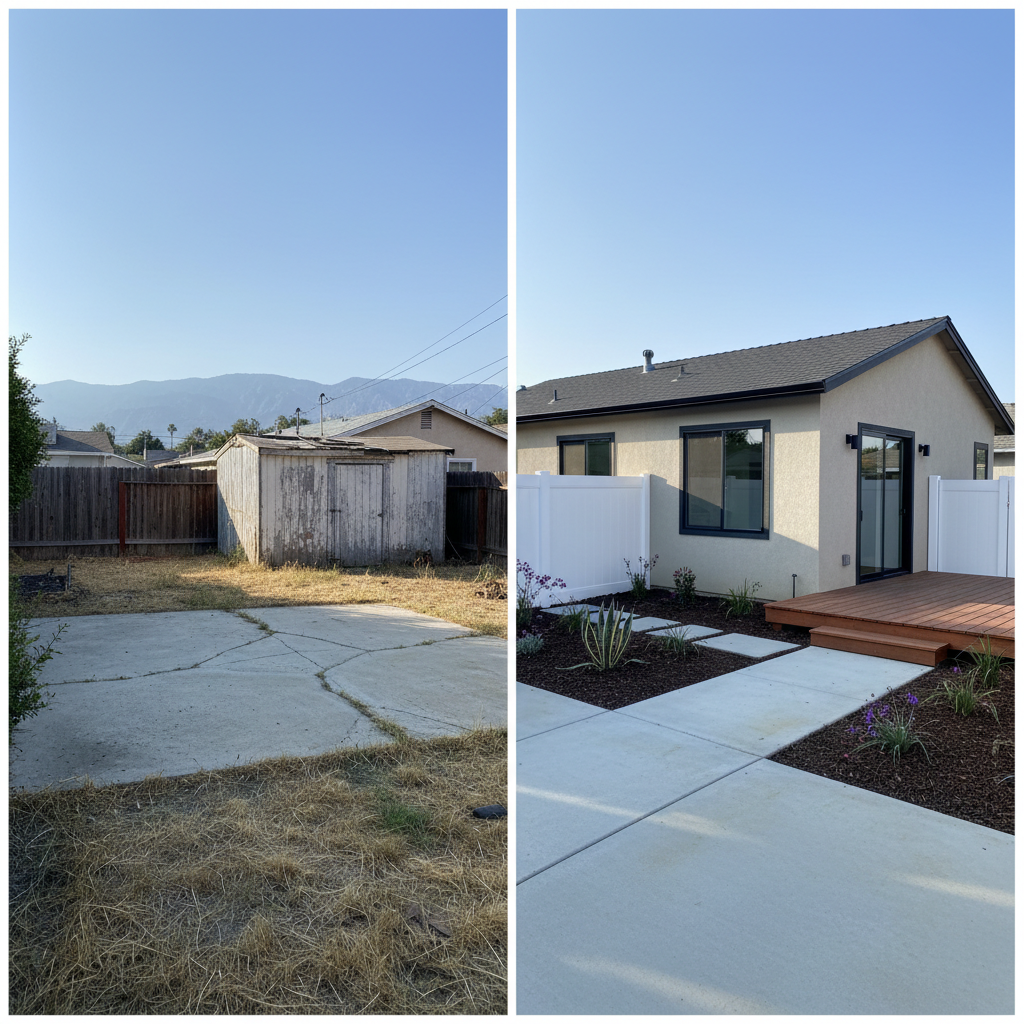
Alright, so you're looking at adding a detached ADU to your property here in Santa Ana. That's a smart move, whether it's for family, rental income, or just extra space. But once you decide on detached, you hit another big question: do you go with a traditional stick-built ADU, or do you opt for a prefabricated (prefab) unit? It's a common dilemma, and I see folks wrestle with it all the time. Let's talk about what each option really means for you.
Stick-Built ADUs: The Traditional Route
When I say stick-built, I mean what you probably picture when you think about a house being built. We're talking about framing it up on-site, piece by piece, just like a regular home. This is how most of the homes in neighborhoods like Floral Park or even down near South Coast Metro were originally constructed.
Pros of Stick-Built:
- Customization is King: This is the biggest advantage. You want a specific layout? A unique roofline to match your main house? Special windows? With stick-built, you can pretty much get exactly what you want. We can match materials, architectural styles, and even weird angles if your lot demands it.
- Site-Specific Adaptability: Every lot in Santa Ana is a little different. Maybe you've got a tricky slope, or an old oak tree we need to build around, or a particular soil condition that needs special foundation work. Stick-built construction lets us adapt to those challenges on the fly.
- Perceived Value: For some buyers down the road, a stick-built ADU feels more like a permanent, integrated part of the property, which can sometimes translate to higher appraisal values.
Cons of Stick-Built:
- Longer Construction Time: Everything happens on your property, exposed to the elements. That means weather delays, more noise and disruption for a longer period, and just a generally slower pace.
- Higher Labor Costs: You're paying for skilled tradespeople to be on your site for weeks or months. That adds up.
- More Waste: There's usually more material waste generated on-site, which means more dumpster fees.
Prefabricated ADUs: The Factory Approach
Prefab ADUs are built in a factory, often in modules, and then transported to your site and assembled. Think of it like a really well-made Lego set for grown-ups. The quality control in a factory setting can be really tight.
Pros of Prefab:
- Faster Construction: This is usually the main draw. The foundation work happens on your site while the ADU is being built in the factory. Once it's delivered, assembly can be incredibly quick – sometimes just a few days for the major components.
- Cost Predictability: Because much of the work is done in a controlled environment, it can be easier to get a firm price upfront, with fewer surprises during the build.
- Less On-Site Disruption: Since the bulk of the construction happens off-site, you have less noise, fewer contractors, and less mess at your home for a shorter duration.
- Quality Control: Factory conditions often lead to very consistent build quality, protected from rain or other elements during construction.
Cons of Prefab:
- Limited Customization: While some prefab companies offer options, you're generally choosing from a set of pre-designed plans and finishes. If you have a very specific vision, it might be hard to achieve.
- Transportation Challenges: Getting a large module from the factory to your Santa Ana backyard can be a logistical nightmare, especially with our sometimes-narrow streets and overhead power lines. This can add significant cost and complexity.
- Foundation Limitations: You still need a proper foundation, and if your site has specific challenges (like that old Orange County clay soil that can shift), the prefab unit might need a more robust, custom foundation anyway, negating some of the speed benefits.
- Financing Hurdles: Sometimes, traditional lenders aren't as familiar with financing prefab units, which can lead to different loan terms or requirements.
Cost, Durability, Maintenance, and Appearance
Let's break down these factors, because that's where the rubber meets the road.
- Cost: This is tricky. On paper, prefab can seem cheaper due to economies of scale and faster build times. However, once you factor in transportation, crane costs for placement, and site-specific foundation work, the gap often narrows significantly. For a truly custom, high-quality finish, stick-built might end up being comparable or even more cost-effective in the long run, especially if you're not doing a bare-bones prefab.
- Durability: Both can be incredibly durable. A well-built stick-frame ADU using quality materials will last generations. Prefab units are also built to high standards and often engineered for transport, making them very robust. It really comes down to the quality of the builder, whether on-site or in the factory.
- Maintenance: No real difference here. Once it's built, an ADU is an ADU. You'll have the same maintenance tasks for the roof, siding, plumbing, and electrical, regardless of how it was constructed.
- Appearance: This is where stick-built often shines. If you want your ADU to seamlessly match your main house, or have a distinct architectural style that elevates your property, stick-built gives you that freedom. Prefab units, while often modern and attractive, can sometimes look a bit generic or